
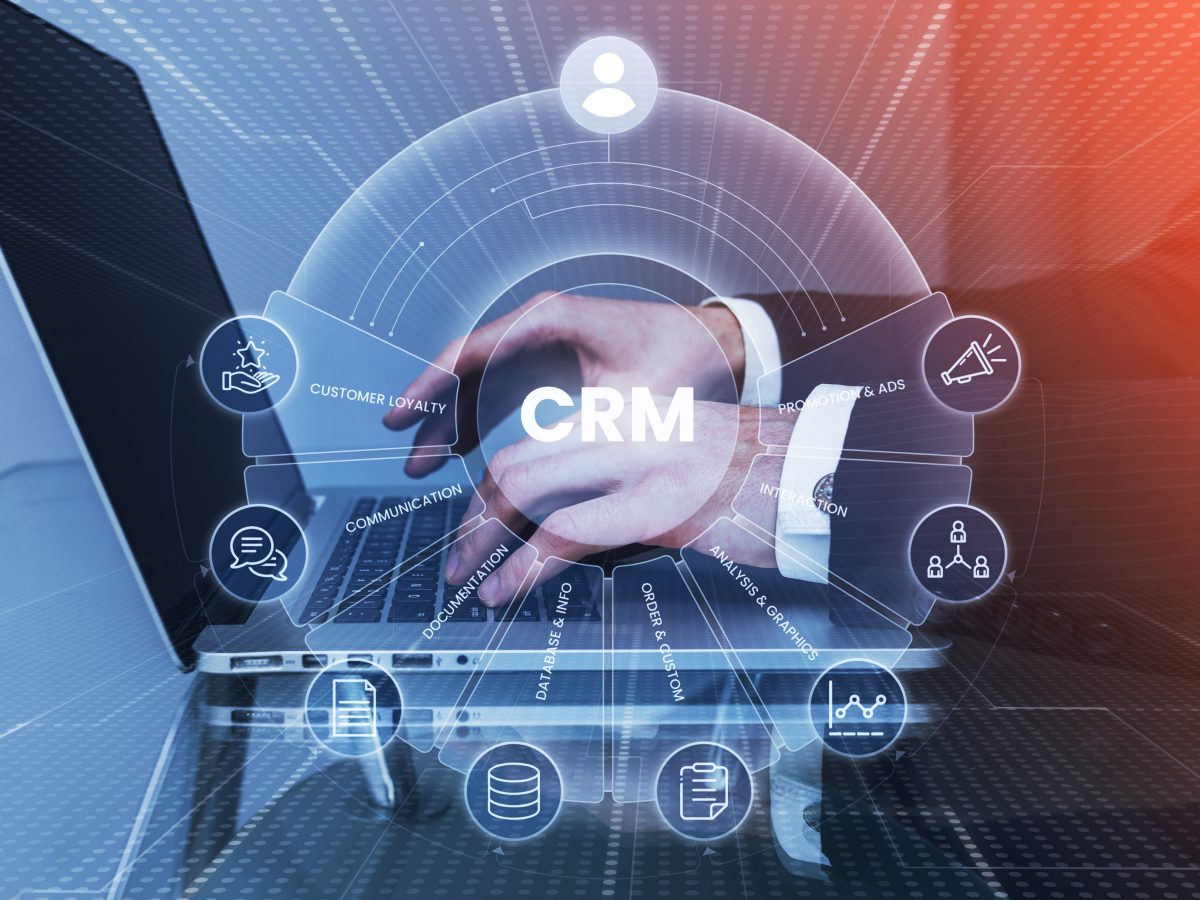
A service-based business is not like selling a product from shelves. The success of your business is contingent on relationships -on keeping track of reminders, fostering prospects over time and providing consistent service to customers who have choices. However, many service companies rely on sticky notes, spreadsheets and memories to manage their most important asset: their pipeline of customers.
This is where CRM for service businesses alters everything.
This blog will explain what happens and explains why ignoring CRM has become a major risk to your competitive position.
What Is a CRM and Why Does It Matter for Service Businesses?
The CRM (Customer Relationship Management) system is a central platform that records each interaction between your team and your customers or potential clients. For companies that deal in products CRM can be beneficial. For service businesses, it’s essential.
Why? In a service industry relationships are the key to success. will be what is being sold.
This is the type of cumulative impact that properly implemented CRM for service businesses regularly produces.
Lead Management: Never Let an Opportunity Slip Again
The primary way where a CRM can earn its living is through the management of leads. The majority of service companies generate leads from a variety of sources, recommendations, LinkedIn inquiry from inbound and events, as well as paid advertising campaigns. Without a systemized approach leads can slip between the cracks frequently.
A CRM organizes all leads into one location, assigns responsibility, creates reminders to follow-up and grades leads based on engagement. Now the system tells me exactly who to call today, and why.”
Achieved control of leads in a CRM usually comprises:
- Automatic lead capture on email forms, website forms and social platforms
- Lead scoring based upon engagement indicators (email opens pages, page visits or forms submitted)
- Assigned ownership, so there is no lead that sits unattended without a team member responsible
- Automated reminders and follow-ups to ensure that momentum is maintained
It’s a predictable and repeatable procedure that doesn’t depend on a single individual’s memory or discipline.
Pipeline Tracking: Seeing Your Business Clearly
Growth requires visibility. It is impossible to make the right hiring or pricing decision without knowing the situation that your pipeline for revenue is in. This is why the pipeline tracking can be a strategic benefit and not only an operational tool.
A CRM provides you with an instant visual overview of each transaction -the stage at which it’s and how long it’s in that position and what the expected close value is, as well as what actions are needed to make it move forward.
For examples sales managers, who manages an entire team of 12 at a B2B HR consultancy firm in Bengaluru are able to go through their pipeline monitor every morning in the same way as you would check the weather forecast. It will tell them what they need to be prepared for.
The robust capabilities for pipeline tracking capabilities allow service companies to:
- Forecast quarterly and monthly revenue with greater precision
- Find bottlenecks, areas where deals are prone to stagnate
- Be sure to prioritize opportunities with high value before they become cold
- Record individual reps’ performances and provide coaching based on actual data
Without this transparency and understanding, growth decisions turn into speculation. As a result, they are calculated bets.

Automation Systems: Freeing Your Team to Do What Humans Do Best
One of the least utilized features in modern CRM software is its automation systems. Routine tasks like sending welcome emails, making discovery calls, scheduling them and following up on proposals, or requesting testimonials take up a lot in time, which can be better spent on more worthwhile tasks.
The CRM’s automation system handles everything on its own. If a lead is new to fill the contact form on your website and is contacted, they will receive an email with a personal acknowledgement.
And if a proposal is left unopened for more than a week the sales rep receives an alert on autopilot. If a contract with a client is renewed in the next 30 days. Then, your account manager gets a prompt reminder to contact.
They’re not small improvements. Over a month, automation systems can recover 8-12 hours per team member. The time that gets reinvested into relationship-building, upselling, and creative problem-solving.
Sales Organization: Building a Team That Scales
A CRM can also be the core of a sales automation systems in a rapidly growing service-based business. When you add team members, the possibility of inconsistency grows. Different reps have different communication styles and follow up on different schedules, and format their pitch in totally different ways, resulting in a sloppy experience for clients which can harm your reputation.
CRMs create a playbook that is shared by the entire team. Every rep follows the exact procedure, employs the same email templates. And keeps track of every interaction in a form that all team members can access. If a customer calls and their rep is not available the team member available access the entire history within a matter of seconds. And offer seamless customer service.
This degree of sales automation systems is what distinguishes businesses who are stuck at Rs.1-2 millions in sales from businesses who are confidently scaling over Rs10 crore and above.

Choosing the Right CRM for Your Business Stage
Every CRM isn’t constructed the same way, and not every company requires complex enterprise features. Platforms such as HubSpot, Zoho CRM, and Salesforce all have different capacities and budgets. A five-person consulting team may have different needs than an IT services firm.
The most important thing is to choose the CRM that your team will actually use. The one that offers clear and simple interfaces, robust mobile access. As well as integrations with applications you’re already using (email and calendars, or and billing programs). The most effective CRM is one that gets used and not the one that has more features.
Conclusion: CRM Is the Infrastructure of Service Business Growth
If you’re committed to growing your service company and generating lead leads, completing deals quicker and retaining customers for longer and creating teams. That operate in a consistent manner a CRM isn’t an option. It’s the base that the rest of your business runs on.
From better lead management to better pipeline tracking, to more precise automated systems and well-organized sales and marketing CRM for service companies is the one investment that will affect every aspect of your revenue generator.
At 7th Growth we help companies in the service industry implement and improve CRM strategies that are designed specifically for their market, size of team and growth targets. If you’re ready to put an end to the money to chance, 7th Growth is where the next chapter of your journey begins.